Confessing that we are sinners is nothing more than admitting that we are imperfect. And naming our sins is simply figuring out the areas where we could improve. In the sacrament of reconciliation we receive the strength to grow closer to perfection, to holiness, a state we can only fully achieve after death.
Category Archives: Faith
Without Christ we’re basically just managing emotions. We try to avoid feeling bad. And when we do feel bad we try to get rid of the feeling through breathing exercises or relaxation, maybe meditation or even vacation, or simply distraction or sleep. Until we feel good enough again to go on living. There’s no reason why we want to prevent or remove the anger or the jealousy or the sorrow other than that it doesn’t feel nice. We’re afraid of bad feelings so we avoid situations that could provoke them. This is how we live without Christ. On a desperate rollercoaster beyond our control.
Conversation with a modern atheist:
“If you were very rich, would you pay for a therapy that would make you live forever?”
“Absolutely!”
“What if it were free?”
“No, then I’d rather die.”
The question is not if you want to go to heaven after you die. The question is if you want to go now.
Even if Jesus only imagined that He was saving you when allowing Himself to be tortured and executed, He deserves your respect. You could call Him a fool for thinking that His suffering would unlock your happiness. But doing so He loved you more than anyone ever has or ever will.
Auriea Harvey: My Veins Are the Wires, My Body Is Your Keyboard
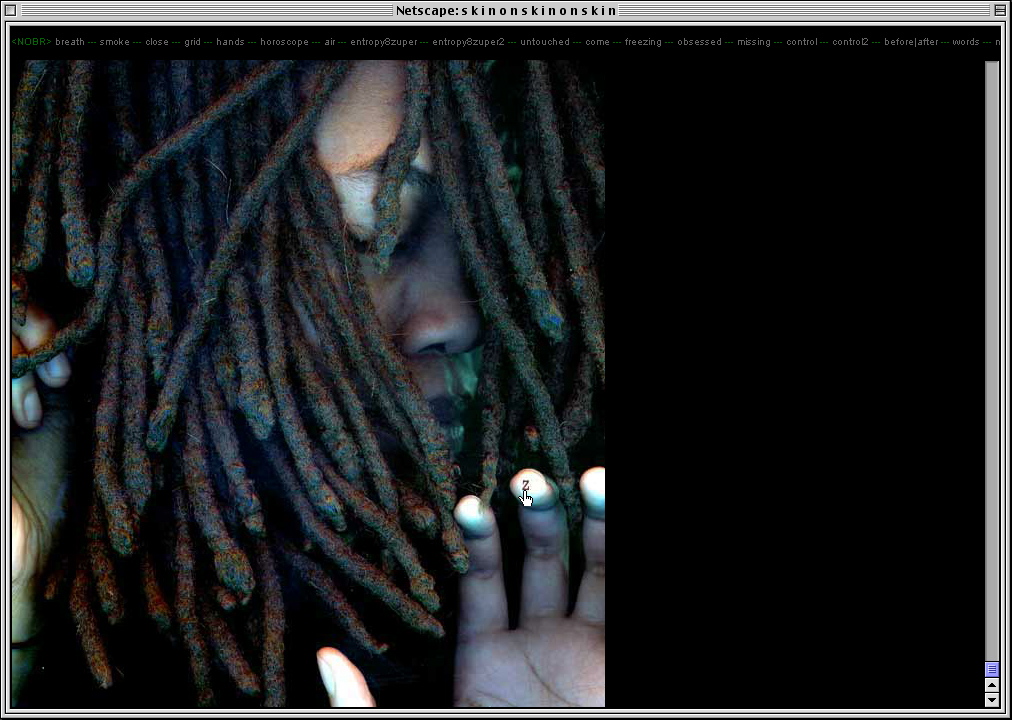
From 2 February to 7 July there will be a giant exhibition about Auriea’s artistic career in the New York Museum of the Moving Image, starting with sketchbooks from the early 1990s all the way to new digital sculptures created for the show. Since during a large chunk of that period (from 1999 to 2019) we were working together, a lot of the pieces in the show are collaborations: web projects by Entropy8Zuper! and videogames by Tale of Tales.
The exhibition will focus on her contributions to our work, which have always involved digital sculpture. While mine (interactivity, atmosphere, soundscapes, etcetera) have become somewhat of a lost art. After the web was ruined by social media we stopped creating art for the web and switched to videogames. And when those were ruined we quit videogames too. Initially in favor of Virtual Reality but that seems to be over now as well.
Auriea was able to make the step towards the world of contemporary fine art and continue her artistic activity in that context. But I have not. Digital art has, from the beginning, been a way for me to stay away from the world of modern art in favor of direct contact with an audience made possible by the internet. I was also seduced by and am still very fond of the unique possibilities of the realtime medium that cannot properly be experienced in the traditional fine art context and for which no other platform was ever developed.
But the most important reason why I stay away from the art world is me. I don’t respond well to the challenges posed by the contemporary art world. I don’t like who I become in confrontation with an environment that I experience as cynical, shallow and driven by money and power and dogmatic politics. But above all, I’m afraid I don’t like most modern and contemporary art. And I don’t enjoy being in an environment where I dislike the work of most of my colleagues. It was fun for a while when I was making games but I guess I feel too old for that kind of easy rebellion now.
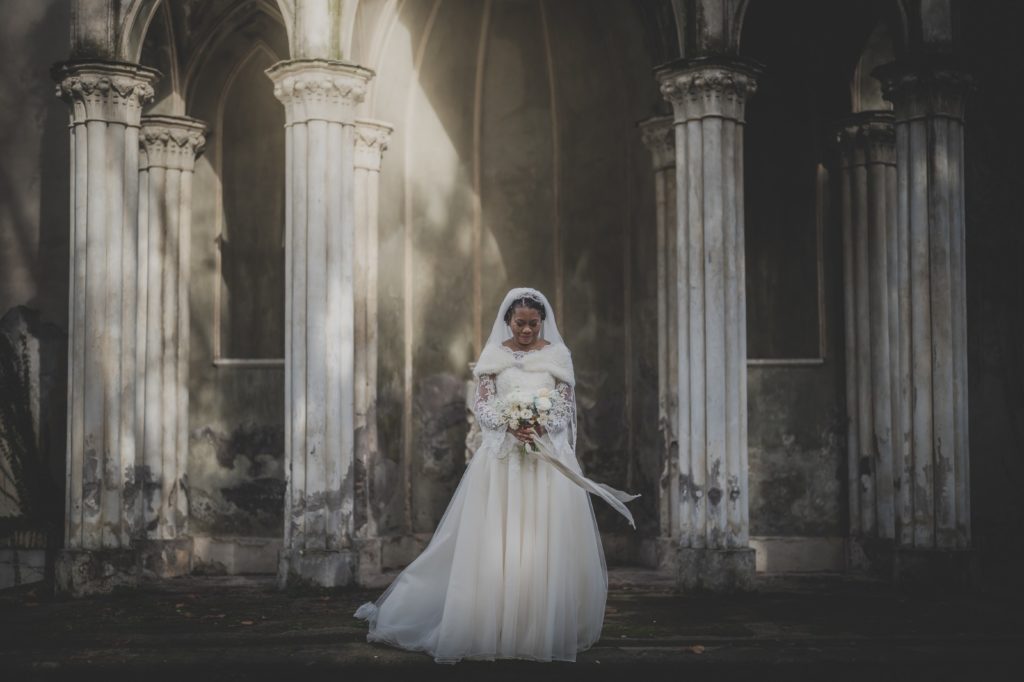
For me, Auriea’s exhibition crowns my new faith. Three years ago I converted to Catholicism. Christianity has taught me a way of living and loving that has made me a much happier person. As an atheist I would never have been able to tolerate the injustice of an exhibition of our collaborative work presented as hers alone. I would have been so angry. It would have probably lead to a divorce. But as a Christian I’m happy to disappear. It’s the eagerly desired response to my many Litanies of Humility. And it makes me profoundly happy to find myself capable of enthusiastically supporting my wife. We recently got married in church. And this exhibition, or at least my modest role in it, extends our holy matrimony: she is the Bride, the Holy Jerusalem, adorned and pure. I am her servant. I lay down my life for her. This is all I want. This is who I am. Finally.
Michael.
Happiest year of my life
That two thousand and twenty-two might have been the happiest year of my life may not be saying much since for most of my life I had been a cynical latently depressed atheist like almost everybody I know.
But 2022 was my first complete year as a Christian. After accepting the Catholic faith last year, this year I regained access to the sacrament of holy communion through a general confession. In 2022 I have been consistently happy uninterrupted by anger or sadness. And I owe it all to faith.
Since we cannot prove nor disprove the existence of God, faith has been a matter of choice. And it’s a choice I continue to make as doubts attack me from all sides. One thing however is objectively true: my religious practice has made me a better person. And faith has been a necessary aspect of this practice.
A day with faith
Every day I get up, relatively early, often before sunrise, to read a hour or so during breakfast. This way I have read Augustine’s confessions, the catechism, the life of Saint Theresa of Avila and now John Paul II’s Theology of the Body. Then I go to my studio and pray the rosary on my knees in front of the window. Preferably during sunrise, or with the moon shining on my face. Praying the rosary is like taking a mental shower. It’s the basis of my day. After that I listen to something on the Hallow app. Then I’m ready for work.
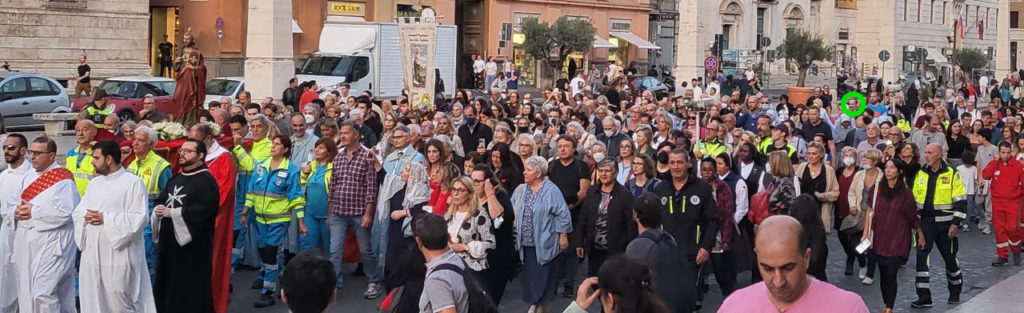
I only work on the morning. The afternoon is reserved for music, language learning, bible study, exercise, naps, walks, chores and occasionally adoration, vespers, mass, and so on. Before going to bed I listen to the gospel of the day and say some evening prayers. Every Sunday and feast day I attend mass. And every Tuesday the weekly catechesis hour at my church. Every month or so I talk to the priest, lately combined with confession. And in Rome, where I live, there’s many opportunities for special masses, for example on the feast day of the saint to which one of the hundreds of churches here is dedicated. I enjoy immersing myself in the crowd that attends such festivities. I have also participated in several processions.
This faith routine forms the foundation of my joyful mood. I feel weird and somehow not really alive without it. I have had to unlearn working intensely for long hours because the concentration away from God makes me cranky and annoyed. But I have also experienced the strange paradox that if I devote sufficient time to faith, everything else I want to do gets done as well. Without having to watch the clock or schedule.
Out of the closet
This year I stopped hiding my faith. I hung a rosary visibly in my studio, and a crucifix on the wall. I got jewels and t-shirts with Christian iconography. And most importantly, I confessed my faith to my family. I was raised an atheist and I raised my children atheist. So I was a bit anxious about this but they responded much better than I feared. Especially after the interview with Sim D’Hertefelt that was published, in Dutch, our mother tongue, on Kerknet to very positive reactions from parents: they were pleasantly surprised to learn things about me that I had not managed to tell them in person.
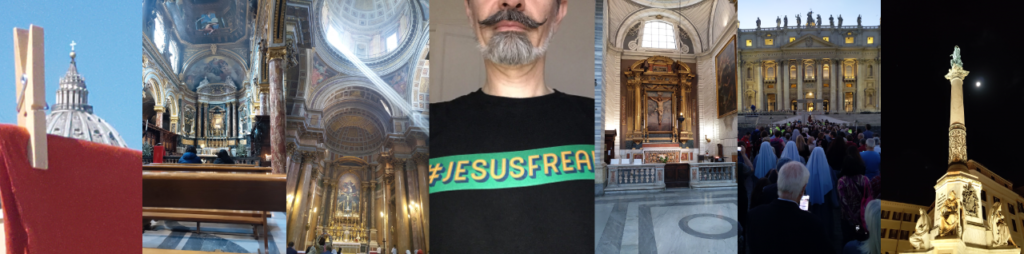
The launch of the first work of art I made as a Christian, The Viriditas Chapel of Perpetual Adoration, was accompanied by declarations of my faith, including a blog post and a novena towards the feast of Saint John Paul II when the project was released. For advent I published a selection from my little book Ex-Atheist in which I confront my ideas about certain topics before and after my conversion. And I revived an old Instagram account to dedicate it to my life with faith.
Christian YouTube
It surprised me that, even here in the very center of Catholicism, while the reduction in the number of active believers is often lamented, it is in fact not easy to learn about the faith. Even once I had decided to be Christian and attended mass, I didn’t really know where to go with my questions. I read books to educate myself (Abigail Favale’s Into the Deep has been crucial). But the thing that probably helped most was the very active presence of Christians on YouTube. Even hardcore protestants like Jackie Hill Perry, John Piper and Tim Mackie, general Christian channels like Premier Unbelievable? and atheists like John Vervaeke have helped me on my way. But most important were of course Catholic channels such as Journey Home, Pints with Aquinas, Bishop Robert Barron, Ascension Presents, Daughters of St. Paul and That Black Catholic Chick. Most of these are American. In Italy I appreciate Bella, prof!, Francesca Parisi, 5pani2pesci, Robert Cheaib, Anita Baldisserotto, Un corpo mi hai dato, Francesco Maria Marino and Achille Boccia‘s strangely obscure liturgy of the hours.
Work and life
For several years I had written down everything I would otherwise have posted on Twitter in a separate file and published all those “tweets” in a little book at the end of the year. This activity has now morphed into writing about the faith, except that I write five times as much. I have no idea if I will ever do anything with all that material.
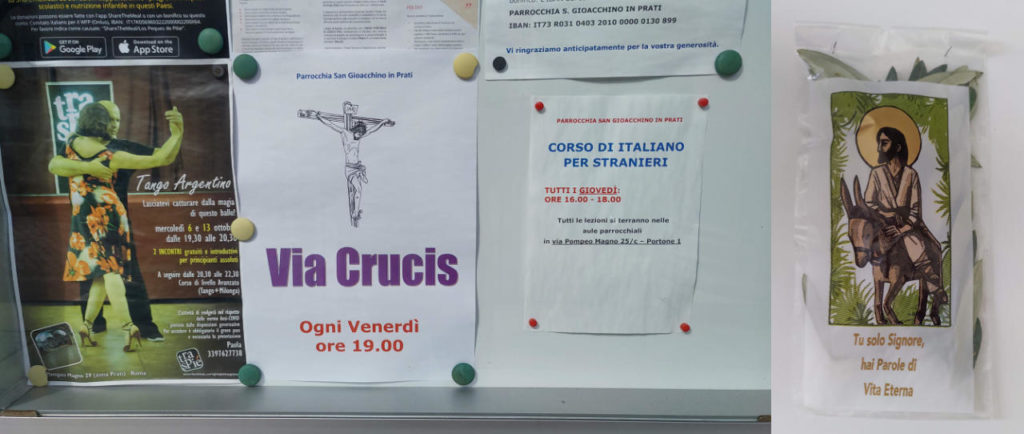
I took lent, the 40 day period in which Christians fast and pray to prepare for the feast of the resurrection on Easter, very seriously this year. I canceled everything but work and devoted a lot more time to prayer, including walking a Via Crucis every week and climbing the Scala Santa, the stairs on which Christ walked to be condemned by Pontius Pilate, on my knees, as is the tradition. Later, assisted by the Hallow app, I consacrated myself to the Holy Virgin Mary in the Capella del Santissimo Sacramento in Saint-Peter’s Basilica.
A huge part of this year’s wonder has been growing even closer to the person I have already shared 23 years of my life with, thanks to the faith, both hers and mine, and embracing the concept of chastity which has put us on an adventure trail towards a Christian marriage.
The key to unlocking the joy and peace that I experienced this year has been humility. Perhaps an unintuitive concept in today’s culture, I believe humility is the source of happiness, with or without faith. I myself have been so arrogant and prideful that God was the only one for whom I would kneel. And I’m so glad I did! It hasn’t been easy. Ridding oneself of pride is a process. Especially because pride is often hard to recognize in oneself. I still have a lot of work to do. So chances are 2023 will be even more spectacular!
Books read in 2022
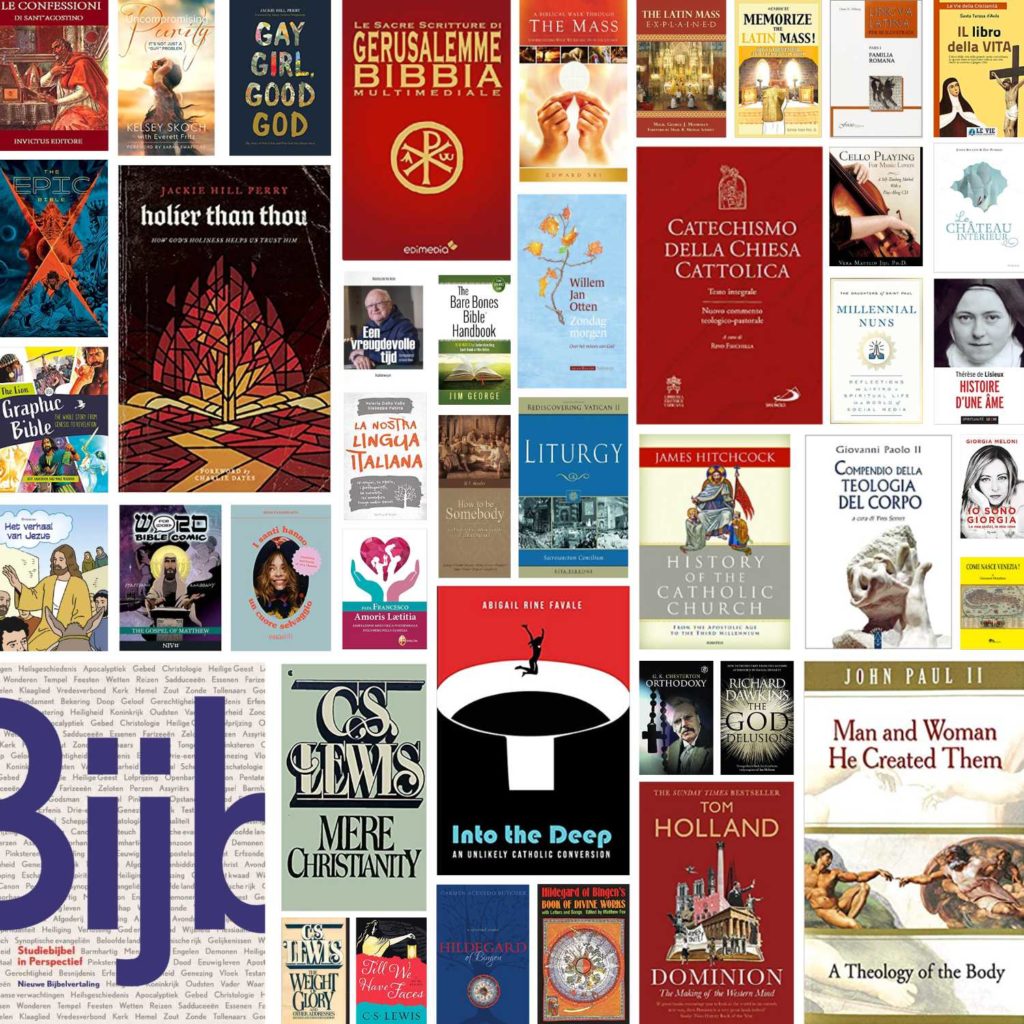
I’m always thinking that I don’t read enough but I was pleasantly surprised after lining up all the books that I have read this year. Granted some of them I had started in the previous year and others I haven’t finished yet, but still I’m pleased with myself.
Since 2022 was my first full year as a Christian, it comes as no surprise that the large majority of these books are related to religion. I even read some bibles in comic strip form to see if they might be suitable to share the story with less enthusiastic readers. But of course I read in the regular Bible too. Preceded by The Bare Bones Bible Handbook which gave me an overview. Then I combined a recent Dutch translation (my mother tongue) with extended commentaries, with the Italian translation, reading backwards starting at Apocalypse in order to read the Old Testament with the New in mind. But that will be for next year. I also read quite a bit of the Catholic Catechism, and commentaries, also in Italian.
After reading Jackie Hill Perry’s autobiographic conversion story in Gay Girl Good God, I read her Holier Than Thou, which really helped me understand our relationship with God and sort of forced me on my knees in front of His majesty. But it was Abigail Favale’s conversion story and especially her theologic reflections in Into the Deep that made me appreciate the profound beauty of the Catholic concept of Christianity, especially in the way in which it provides answers to many issues in contemporary secular culture.
After attending Tridentine Mass I started investigating what the mass was all about. And I even began learning Latin because it frustrated me that I couldn’t understand the gospel readings. And I read up on Vatican II to learn what some American schismatic fantasies were all about.
I “read” C.S. Lewis’s Mere Christianity by listening to the excellent CSLewisDoodle on YouTube and Chesterton’s Orthodoxy in a similar way. And I listened to the Daughters of Saint Paul podcast which lead met to their bundle Millennial Nuns about how a very diverse bunch of women decided to devote their lives to Christ. I also used the Hallow app a lot, for instance to listen to the autobiography of Thérèse de Lisieux read by the beautifully moving voice of sister Orianne Petra Rene.
I realize now that I my old preference for female authors doesn’t seem to have changed. Next to the writers mentioned above, I also read Therese of Avila’s Vita and many different things by Hildegard von Bingen. I also read the first book by a very young author from my new home country, Rosa Evangelista, whose youthful enthusiasm for the catholic faith is infectious and at time hilarious. Even the text book for my new instrument, the cello, was written by a woman. And I read the first chapters of Giorgia Meloni’s autobiography to understand a little better where our new prime minister is coming from.
But I’ve been charmed by male authors too. The new bishop of my former home town of Ghent had a lot of interesting things to say about lent. Ages ago I had read a book by Willem Jan Otten about pornography and it turns out that he has converted to Catholicism, not an obvious choice for a Dutchman. I enjoyed his book about not attending mass during the Covid lockdowns. And then of course there’s the great Tom Holland. After watching hours of him talking about how even atheist Westerners are essentially Christian, I started reading his history of Christianity called Dominion.
The most important discovery for me this year has been the writings of Pope John Paul II. Since before my conversion I had lead a life filled with porn and fornication and now I wanted to marry for the church, I felt a great need to educate myself on love and sex. John Paul’s Theology of the Body is giving me wonderful insights in the centrality of the body in Catholicism and the sacredness of love.
I tried to read The God Delusion by Richard Dawkins to see if he could offer any good arguments why I should not live this beautiful Christian life that brings me so much joy. But I didn’t get far into the book because it started with attacks on people and their ideas rather than sharing his own convictions.
I did not believe
The Viriditas Chapel of Perpetual Adoration is the first work of art that I have created as a Christian. But this is far from the first time Christianity inspired me. In fact, the theme seems to have followed me throughout my creative life. God has been tirelessly knocking on that door and I kept wondering “What on earth is that noise?”
I grew up in an atheist household but I attended catholic schools. Hence my familiarity with Christian narratives. I have also long preferred old art. As a result Christian themes and iconography were no stranger to me. And as a designer of immersive spaces, I was drawn to churches for inspiration. I even regularly attended mass simply for the experience, to “see the machine performing the function it had been designed for.” But I did not believe.

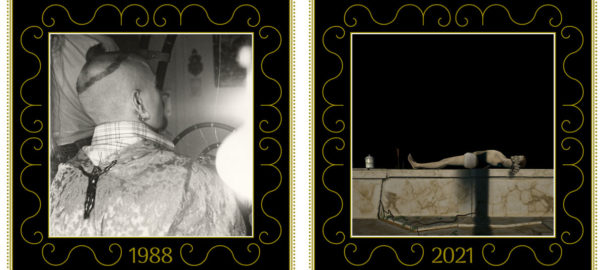
1988 As a teenager I made clothes for myself. On one of my jackets I had sewn a bronze crucifix found at a flea market. But I did not believe.
1992 Right after school I created lots of art objects. I often used imagery from mass media and advertising. For one piece I mounted the logo of a brand of toilet paper in gold on a piece of black cardboard shaped like a baroque frame. The logo was a lamb. But I did not believe.
1995 In the early days of the web there had been a bug in the Netscape browser that allowed defining the body tag more than once. Thanks to the slow speed of modems this could be used to create animations that were otherwise not yet possible. When that feature was removed I created a web site called The Church of the Multiple Body Tag in protest. It referenced the choice between Jesus and Barabbas and the number of the beast. But I did not believe.
1995 In my first net.art piece called Home I made a sort of crucifix of a framed portrait of Kate Moss, two guns for hands and an electrical socket for feet on a wallpaper background. And only now, almost 30 years later, I discover that in that image, the model is wearing a necklace with a cross. But back then, I did not believe.
1996 My last net.art piece with Group Z, Belgium was called I confess. It was an online confessional with a game interface that forced you to admit all the sins you had committed as an artist. But I did not believe.
1997 In the early web days I was involved in several collaborative projects. One of them was on the hell.com domain for which I created the web interface. But I did not believe.
1997 The website collaboration with Olia Lialina started when she said her plane had crashed and she was writing from paradise. So we named the site Heaven & Hell, after the internet connection we discovered between the two. But I did not believe.

1999 When I met the love of my life we were separated by an ocean. We started creating together the day after. We were so overwhelmed by our experience that we reached for the grandest thing we could think of to express our love in the wires: the Pentateuch. Our web site unfolded a love story inspired by the first five books of the Bible. We called the whole thing The Godlove Museum. But I did not believe.
1999 Genesis was about two souls meeting online. Our relationship was both amorous and creative. We represented ourselves as saints, used baroque ornaments and sacred music. But I did not believe.
1999 When farao let Auriea go after several dramatic plagues, we made a website called Exodus. But I did not believe.
2000 When dealing with immigration laws and learning the customs of a new land, we made a chapter of The Godlove Museum inspired by the Bible book of Leviticus. But I did not believe.
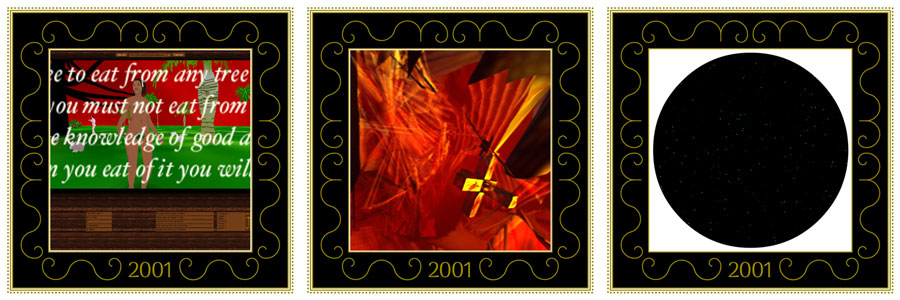
2001 In our first interactive 3D piece, Eden.Garden, we used scans of our own bodies to represent Adam and Eve in a Garden of Eden generated from the code from any web page. Genesis was quoted directly. But I did not believe.
2001 In preparation for our first experiments with 3D, Auriea and I had scanned ourselves kissing. With The Kiss we created an immersive environment inside of the mesh of our entwined bodies that shared one heart that was shaped like a cross. But I did not believe.
2001 We called a small web project Per omnia saecula saeculorum, referencing a well known trinitarian doxology, with music from Handel’s Messiah. But I did not believe.
2002 The attack by US president Bush on Afghanistan was accompanied by rhetoric that seemed to come straight from the Old Testament. Simultaneously Auriea and I realized how different our cultures really were. We mixed quotes from Bible and president and even Jesus made an appearance in Numbers. But I did not believe.
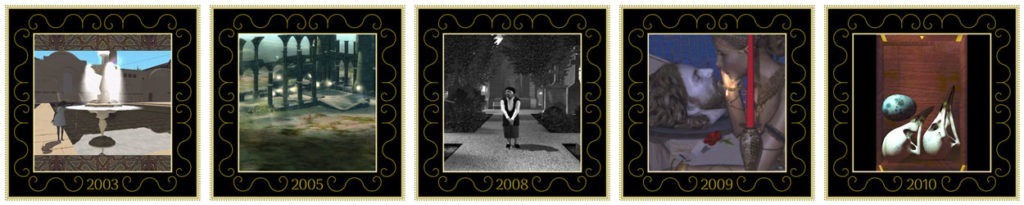
2003 Our first videogame creation attempt, simply called 8, was inspired by a fairy tale, not a biblical text. I did include a chapel in my design for the palace of Sleeping Beauty. And the music we had chosen before working with Gerry De Mol was Pergolesi’s Stabat Mater. But I did not believe.
2005 When we figured out how to create and release a game, we made one in which deer would have glowing signs between their antlers, as in the legend of the conversion of Saint Hubert. At the launch of the project in the former abbey of Ename online players would convert visitors of the exhibition. And the central feature of this first phase of The Endless Forest was the ruin of a church. But I did not believe.
2006 Long after the previous chapter, when we had already given up on the web as an artistic medium, we created the last part of The Godlove Museum, Deuteronomy, in which we remixed the previous parts with Bible quotes about rules and regulations to express the sadness of not being able to enter the promised land. But I did not believe.
2008 In The Graveyard you play an old lady who visits a cemetery and listens to a song. It was inspired by my memories of the peaceful combination of solemn graves and lively nature in the cemetery of the small town where I spent my adolescent years. And by my grandmother who was still alive at the time and deeply catholic. I was profoundly struck by the cheerfulness with which she expressed her desire to join her husband who had died shortly before. But I did not believe.
2009 Fatale tells the story of the execution of John the Baptist. You play his ghost in his final night on earth, free to contemplate the love of Salome imagined by Oscar Wilde. Another biblical story. But I did not believe.
2010 When the first iPhone came out we created a Memento Mori for it the name of which, Vanitas, referred directly to the biblical basis of the concept from Ecclesiastes: “Vanitas vanitatum et omnia vanitas.” But I did not believe.
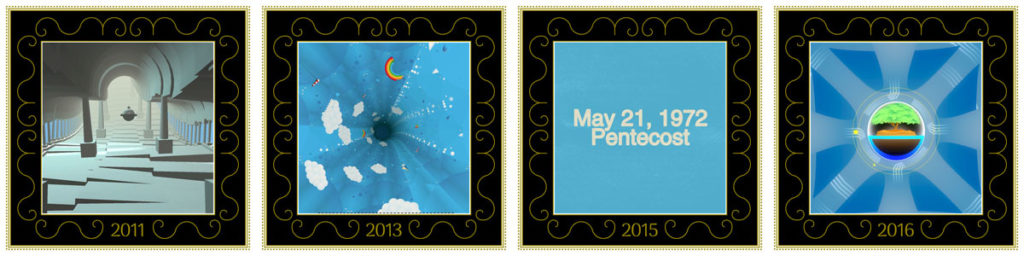
2011 During a research project called Cncntric I explored my interest in sacred architecture and medieval cosmology. I was mesmerized by how the architecture of a church would lead the visitor from the square that represents earth to the circle that represents heaven. And the geocentric conception of the universe, while disproven by Copernicus, still made a lot of spiritual sense. I love the idea of our planet floating in the embrace of ever expanding spheres and finally by God Himself. But I did not believe.
2013 We named Luxuria Superbia, a game the simulates sexual pleasure in an abstract and playful way, after the Latin words for two mortal sins: lust and pride. But I did not believe.
2015 Sunset takes place in San Bavón, the capital of an imaginary South-American country. For couleur locale, the dates in the game were accompanied by the mention of the Christian saint or feast of that day. But I did not believe.
2016 LOCK was a simple game structured along a gigantic geocentric universe. The name was an abbreviation of Loci Omnes Caelesistis Kyries which means something like “All Places of the Heavenly Lord”. But I did not believe.
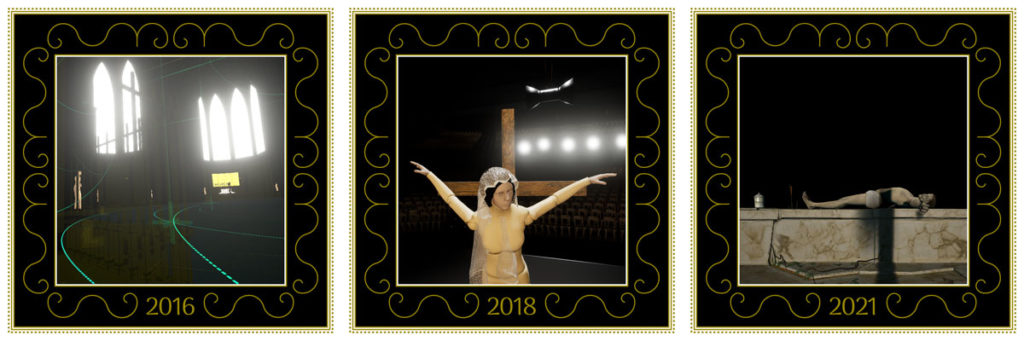
2016 Liberated from the pressure of making commercial videogames, I found myself free to explore my life-long passion for Christian iconography en symbolism in old art and architecture. This culminated in a giant umbrella project called Cathedral-in-the-Clouds. I wanted to create opportunities for contemplation inspired by Christian narratives that I felt should be considered equally valuable to modern culture as Greco-Roman mythology. Backed by a successful crowdsourcing campaign and inspired by visits to numerous cathedrals in Belgium, France, Italy, Spain and Poland we created a prototype for a virtual reality cathedral. And the project even lead me to leave my country and move to Rome, around the corner of the Vatican of all places. But I did not believe.
2018 Cricoterie is a Virtual Reality program inspired by the Theater of Death of Polish theater make Tadeusz Kantor. As such it addressed the theme of religion and featured crosses and a priest. I relished the opportunity to deal with completely serious subject matter. But did not believe.
2021 After several rejected proposals for Christian themed dioramas -which turned out to be the most controversial subject of my already somewhat defiant career- including a tribute to Saint Ambrose, a chapel for Saint Anthony and a virtual sculpture of Adam and Eve, I managed to create a pietà in Virtual Reality. In Compassie I have the user take the place of the Holy Virgin sitting at the bottom of the cross with the dead body of her son on her lap. But I did not believe.
Michael Samyn, Rome, 14 October 2022.